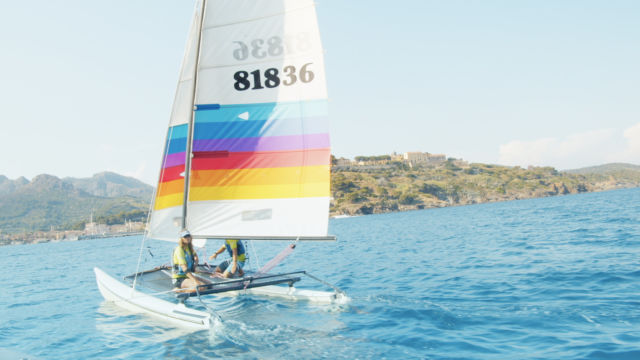
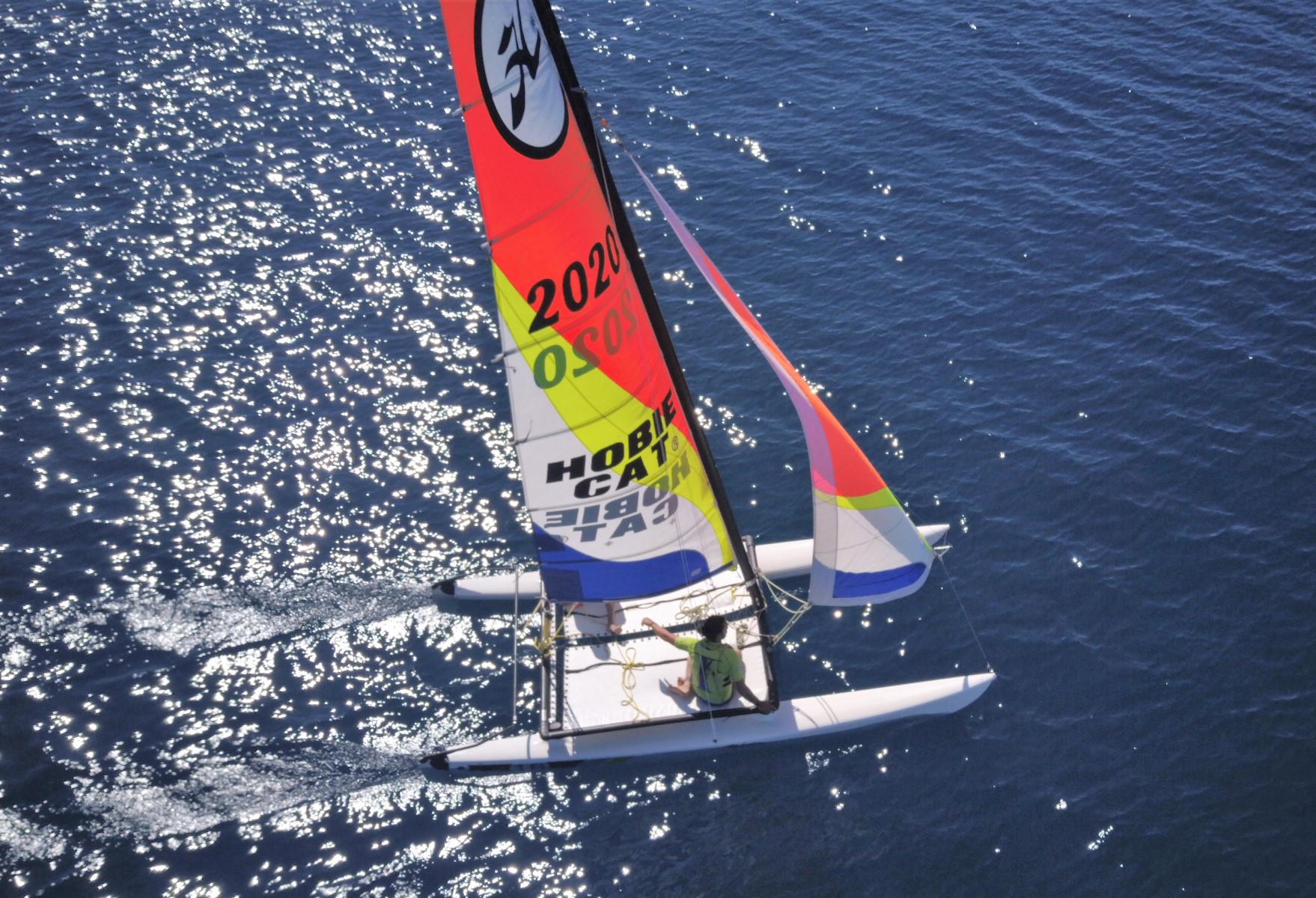
A differenze delle derive tradizionali che si rovesciano di lato il catamarano lo può fare…
Virare con Hobie-Cat 16
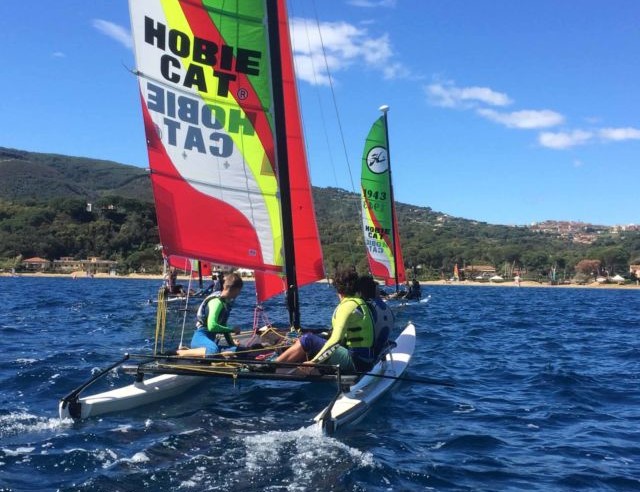
C’è chi sostiene che il catamarano non vira.
Non è corretto, basta sapere come fare.
Lo spieghiamo in questa prima puntata di una serie di articoli dedicati ai due scafi.
Molti sostengono che il catamarano non vira, in realtà vira anche da fermo, bisogna solo saperlo fare.
La virata
Se veramente si vuole apprendere a virare su un catamarano è bene saperlo fare su un Hobie Cat 16, perché è sempre una barca versatile e privo di deriva e ciò influisce notevolmente sulla manovra.
Altri catamarani provvisti di deriva infatti virano molto bene senza necessità di particolari attenzioni.
Partendo dal presupposto che in questo articolo stiamo parlando a chi già una virata almeno teoricamente cosa è, vediamo le differenze tra la manovra con una classica deriva a vela e un catamarano come appunto l’Hobie Cat 16.
I tre elementi chiave che fanno virare un’imbarcazione sono:
- i pesi
- le vele
- il timone
Pesi
Mentre per agevolare la virata di una deriva la si fa sbandare sottovento, il catamarano all’inverso ha bisogno di fare perno sullo scafo sopra-vento.
Quindi timoniere e prodiere dovranno rimanere sul lato sopra-vento, ovvero il lato interno alla curva che compirà la barca nel cambio di mure, fino a che lo stesso non diventi il lato sottovento.
L’equipaggio si sposterà solo quando le vele cominceranno a lavorare sulle nuove mura.
La rotazione viene agevolata sostanzialmente appesantendo lo scafo interno del catamarano e alleggerendo quello esterno.
Vele
Come tutti sanno la randa è orziera e il fiocco è poggiero, ma è necessaria considerare che nell’Hobie Cat 16 la randa ha una superficie molto ampia.
Pertanto ne abbiamo bisogno nella prima parte della virata, fintanto che il catamarano deve orzare, viceversa, nella seconda parte, quando la barca va alla poggia, dobbiamo giocare d’anticipo facendo far lavorare il prima possibile il fiocco tenuto a collo.
In questa fase la randa invece deve essere lascata, poiché essendo potente e orziera, impedirebbe alla barca di poggiare per uscire dall’angolo morto ( ossia quell’angolo in cui il vento è contrario e non porta e si avanzare prevalentemente con l’abbrivo ).
Durante la sequenza della virata pertanto, il timoniere deve liberare la scotta della randa dallo strozzascotte, ma anche aiutare la vela a spostarsi sulle nuove mure tirando fisicamente il boma con la mano.
In uscita dall’angolo morto il fiocco deve cominciare a lavorare immediatamente sulle nuove mure.
In questo modo comincerà a spingere la barca in avanti.
Solo dopo si potrà cominciare a cazzare la randa.
L’errore tipico di chi va in deriva è proprio quello di sottovalutare l’importanza del lascare la randa quando si è controvento e spesso dimenticarsi di tenere il fiocco a collo.
Il timone
La barra spinta sottovento farà andare progressivamente l’Hobie Cat all’orza e così dovrà restare finché la barca non comincerà a poggiare.
Solo una volta superato l’angolo morto potrà essere raddrizzato.
Infatti, se il timone viene messo all’orza troppo bruscamente, la pala farà da freno in acqua facendoci perdere quella velocità che sul catamarano è indispensabile per portare a compimento la manovra della virata.
Related Posts