C’è chi sostiene che il catamarano non vira. Non è corretto, basta sapere come fare.…
Il Tell Tales Ingannatore
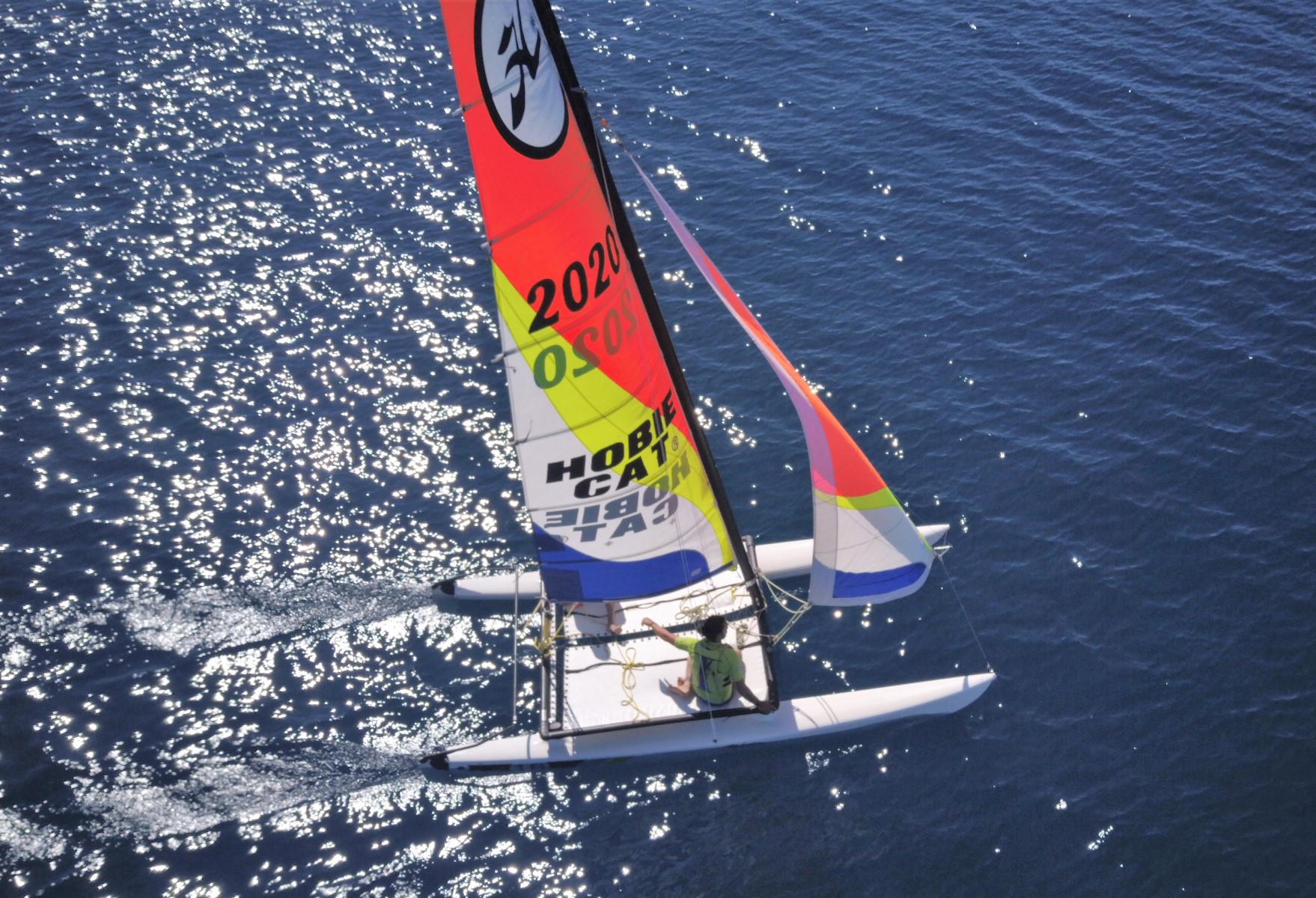
A causa dell’elevata velocità dell’Hobie Cat, di bolina gli indicatori di flusso sopra-vento fanno presumere che l’assetto delle vele debba essere modificato, ma non è così.
SILVIA GUERRA, RESPONSABILE DEL CENTRO VELICO DI NAREGNO ( NONCHÉ FORMATORE DI ISTRUTTORI PER LA UISP E PER L’ASSOCIAZIONE ITALIANA HOBIE-CAT) SVELA I SEGRETI TECNICI PER LA CONDUZIONE DEI CATAMARANI.
Spesso quando mi trovo degli allievi non proprio neofiti mi capita di vedere che al momento di regolare le vele cercano subito l’aiuto dei tell tales, gli indicatori del flusso d’aria sulle vele. Teoria vuole infatti che finché il flusso d’aria scorre indisturbato sulla vela, gli indicatori restano orizzontali.
Ma un principiante deve saper regolare la vela “al limite che punge” e per fare questo deve capire prima in che andatura si trova, solo dopo gli si potrà spiegare il funzionamento dei filetti o tell tales.
Anche perché ci sono casi in cui la suddetta regola viene disattesa.
Per esempio a bordo dell’Hobie Cat 16 come di qualsiasi altro mezzo veloce.
Vediamo perché ma prima di tutto una puntualizzazione: l’andatura va considerata in base al vento reale e non a quello apparente.
E’ dal fraintendimento di questo concetto che si originano facilmente confusione ed errori.
Se si parla di gradi di bolina, lo si fa in relazione al vento reale di conseguenze chi pensa che una barca possa stringere il vento anche a 20 gradi si sbaglia clamorosamente.
In tutti i testi quando si raffigura il quadro delle andature si trova rappresentato un angolo morto di 90 gradi ( 45 più 45 ), dopodiché se alcune barche da regata risalgono anche 35 gradi non è importante quando siamo in un contesto di iniziazione.
Di Bolina.
A questo punto però cosa succede: prendiamo un velista che sale la prima volta sul catamarano, si mette di bolina, regola la vela, guarda i filetti ed ecco che comincia a poggiare perché il filetto sopra-vento fileggia troppo, è rivolto verso l’alto e sembra che ciò non vada bene.
Invece sì!
Se veramente vogliamo fare una bella bolina in condizioni di vento almeno sui 6-8 nodi, il filetto sopra-vento deve fileggiare verso l’alto – più il vento è forte e più sta dritto come se fosse incollato alla vela.
Questo succede poiché il vento apparente ha un angolo molto inferiori ai 45 gradi e il filetto sopravento ci indica che se vogliamo la vela regolata bene dobbiamo poggiare, ma visto che in questo caso il nostro obiettivo è la bolina, se poggiamo perdiamo troppo angolo.
Su una classica barca a vela che invece non naviga altrettanto velocemente non c’è tanta differenza tra vento reale ed apparente e il filetto sopra-vento e quello sottovento saranno più o meno paralleli.
Riassumendo, se si vuole fare una bella bolina in catamarano, bisogna:
- orzare sino a che il filetto sopra-vento comincia a salire
- fare attenzione a non far pungere il fiocco. Per fare questo è necessario sentire la barca: un attimo prima che punga il fiocco rallenta; in questo caso si lascia un pochino la scotta della randa e si poggia per riprendere la rotta
- attenzione: se i filetto sono paralleli, probabilmente oramai ci troviamo al traverso ma con un vento apparente a 45 gradi.
Il Lasco.
Al lasco la navigazione si fa interessante e molto entusiasmante.
Un catamarano con vento a 135 gradi tra i 15 e i 18 nodi è un po’ come il pollo con la patatine, al top.
Vediamo cosa succede.
Ci mettiamo al lasco, abbiamo il carrello della randa e del fiocco tutto aperto, la barca comincia ad accelerare, osservando il tell tales, ne abbiamo tre sulla randa e due sul fiocco .
Quelli in basso in genere indicano la regolazione del carrello e quello in alto la regolazione della scotta.
Notimo che comincia a salire il filetto sopra-vento in basso, cominciamo a cazzare il carrello, poi sale quello in alto , cazziamo allora la scotta: ora sale ancora quello in asso e continuiamo a cazzare il carrello.
Insomma il risultato è che se ci sono almeno 12-14 nodi di vento ci troveremo con una randa regolata come nella bolina larga.
Il vento apparente a questo punto arriverà da circa 50 gradi e i filetti saranno paralleli.
Ma allora che differenza fa?
E’ come se fossimo di bolina?
Cosa cambia?
L’assetto, quindi la posizione dell’equipaggio?
Ecco perché è fondamentale sapere senza esitazioni in che andatura stiamo navigando.
Related Posts