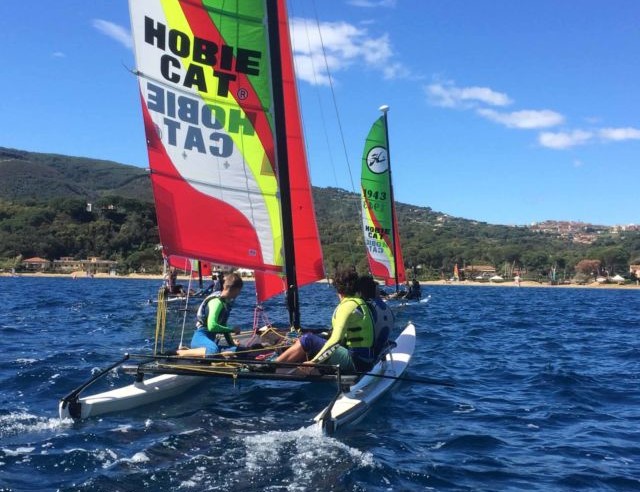
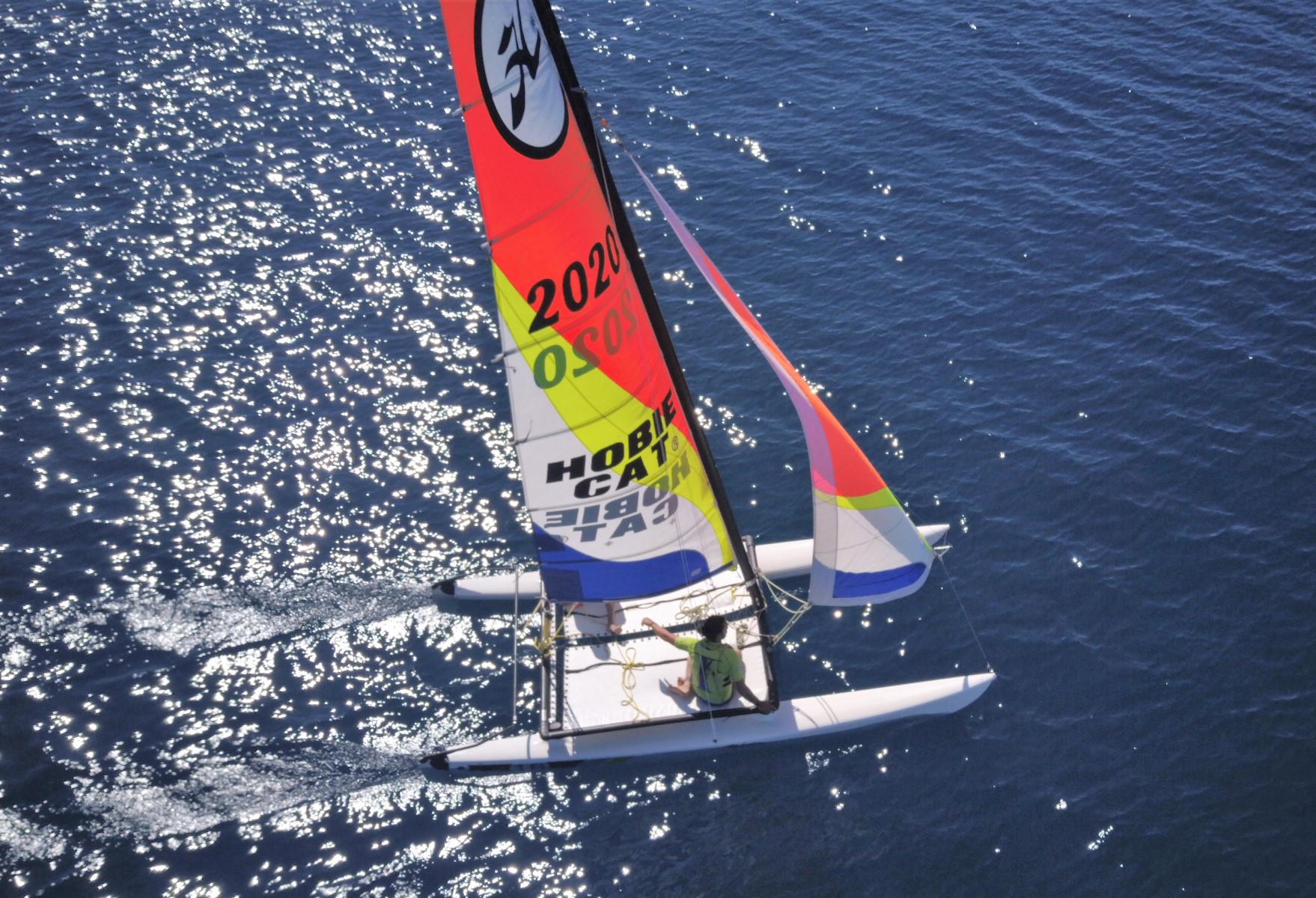
C’è chi sostiene che il catamarano non vira. Non è corretto, basta sapere come fare.…
4 Scuffie con l’Hobie Cat
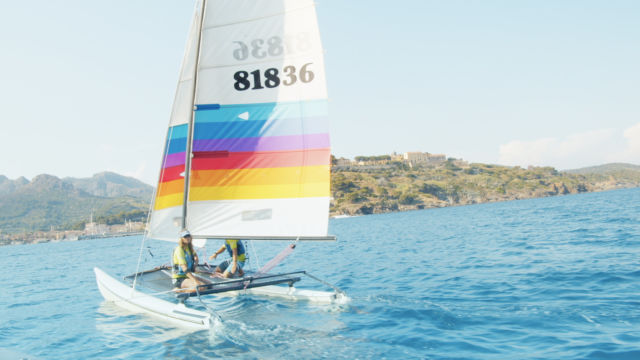
A differenze delle derive tradizionali che si rovesciano di lato il catamarano lo può fare sopra-vento, sottovento, di poppa e di prua. Vediamo perché e come uscirne.
Silvia Guerra, responsabile del Centro Velico di Naregno ( nonché formatore di istruttori per la Uisp e per l’associazione italiana Hobie-cat ) svela i segreti tecnici per la conduzione dei catamarani.
Questo mese parliamo della scuffia in catamarano.
La prima cosa da capire è come questo tipo di imbarcazione possa scuffiare.
A differenza di una normale deriva che scuffia di lato, su un catamarano ciò può accadere su tutti e quattro i lati.
Scuffia di poppa
Se in virata l’equipaggio è troppo arretrato si verifica la scuffia di poppa. Il trampolino prende vento ( in particolar modo se non è di quelli “mesh” ovvero a maglie larghe e si finisce in acqua.
Scuffia sottovento
Il caso più comune è quello della scuffia sottovento in cui è sempre il vento a forzare sul trampolino, e si verifica lascando la vela in ritardo una volta che l’imbarcazione risultasse molto inclinata.
Scuffia sopravento
La scuffia sopra-vento è molto difficile che accada, ma sempre possibile.
Se in due al trapezio, ad esempio, si dovesse finire in acqua per un calo improvviso di vento, ci si potrebbe tirare la barca addosso.
Ma ciò che avverrebbe comunque molto lentamente e senza conseguenze.
Scuffia di Prua
Qui parliamo del famoso problema dell’ingavonata.
Perché un catamarano si ingavona?
Navigando al lasco ciò può accadere per il troppo peso a prua, per una brusca poggiata, ma l’errore più comune è quello di lascare la vela per ridurre la velocità mentre la cosa migliore da fare è poggiare lentamente in modo da avvicinarsi all’andatura di poppa.
Lascando la scotta della randa la parte alta della vela si svegolare e questo tende a spingere la prua sott’acqua. Ma la barca scuffia perché l’equipaggio vola in avanti: se si riuscisse di tenersi saldamente a poppa, il catamarano non scuffierebbe.
Raddrizzamento
A questo punto, in un modo o nell’altro, ci troviamo in acqua.
La prima cosa da fare è non mollare la barca, allontanarsi subito dal centro e spostarsi perché se l’albero dovesse finire sott’acqua, correremmo il rischio di rimanere impigliati e venire trascinati a fondo.
Quindi, sempre tenendo l’imbarcazione, uno dei due membri dell’equipaggio si porta immediatamente a prua, afferra il catamarano e comincia a nuotare facendolo ruotare in modo da posizionare la prua a 45 gradi rispetto al vento così che questo ci aiuti poi a sollevare la vela fuori dall’acqua e una volta raddrizzata non si scuffi nuovamente sottovento.
Il secondo membro dell’equipaggio in piedi sullo scafo in acqua, sporgendosi controlla che le scotte di randa e fiocco siano libere, estrae la cima di recupero, solitamente posizionata nell’apposita tasca del trampolino e la lancia sopra la traversa in modo da potersi appendere per il raddrizzamento.
A questo punto chi ha ruotato la barca lascia la prua e sale sullo scafo insieme al compagno, cercando di far corpo unico per non disperdere il peso ( per l’Hobie Cat 16 ci vogliono 120 chili per poterla raddrizzare o molto, molto vento ).
Ci si appende alla cima di recupero stando dritti con le spalle indietro ( non il sedere e senza toccare l’acqua, quando il catamarano sta per raddrizzarsi molto semplicemente si rimane sotto il cat afferrando il dolphin strinker ( in italiano martingala ).
In questo modo impediamo alla barca di riscuffiare e siamo in sicurezza sia per non prenderla in testa sia per non perdere l’imbarcazione.
Questo si risale a bordo( sempre meglio sopra-vento ma non è fondamentale come sulla deriva, visto la stabilità del mezzo ) rimettiamo tutto a posto e ripartiamo.
Nel caso il catamarano fosse andato a 180 gradi.
Da sopra il trampolino ( non serve andare sott’acqua ) liberiamo le scotte e controlliamo che lo stick non blocchi lo spostamento della randa; prendiamo la cima di recupero e la facciamo comunque passare sopra la traversa nel solito modo, ma attenzione, rimanere in piedi sul lato sottovento perché nel frattempo la barca scarroccia e sott’acqua la corrente che si crea per lo spostamento della barca fa forza sulla vela aiutandola a sollevarsi anziché contrastarla.
In pratica ricordare di:
- non mollare mai l’imbarcazione levandosi subito dal lato sottovento;
- controllare che le scotte siano libere;
- posizionare il catamarano a 45 gradi al vento
- tenersi assicurati al dolphin striker, quando lo scafo si raddrizza
Related Posts